
Book Club Discussion Questions Below
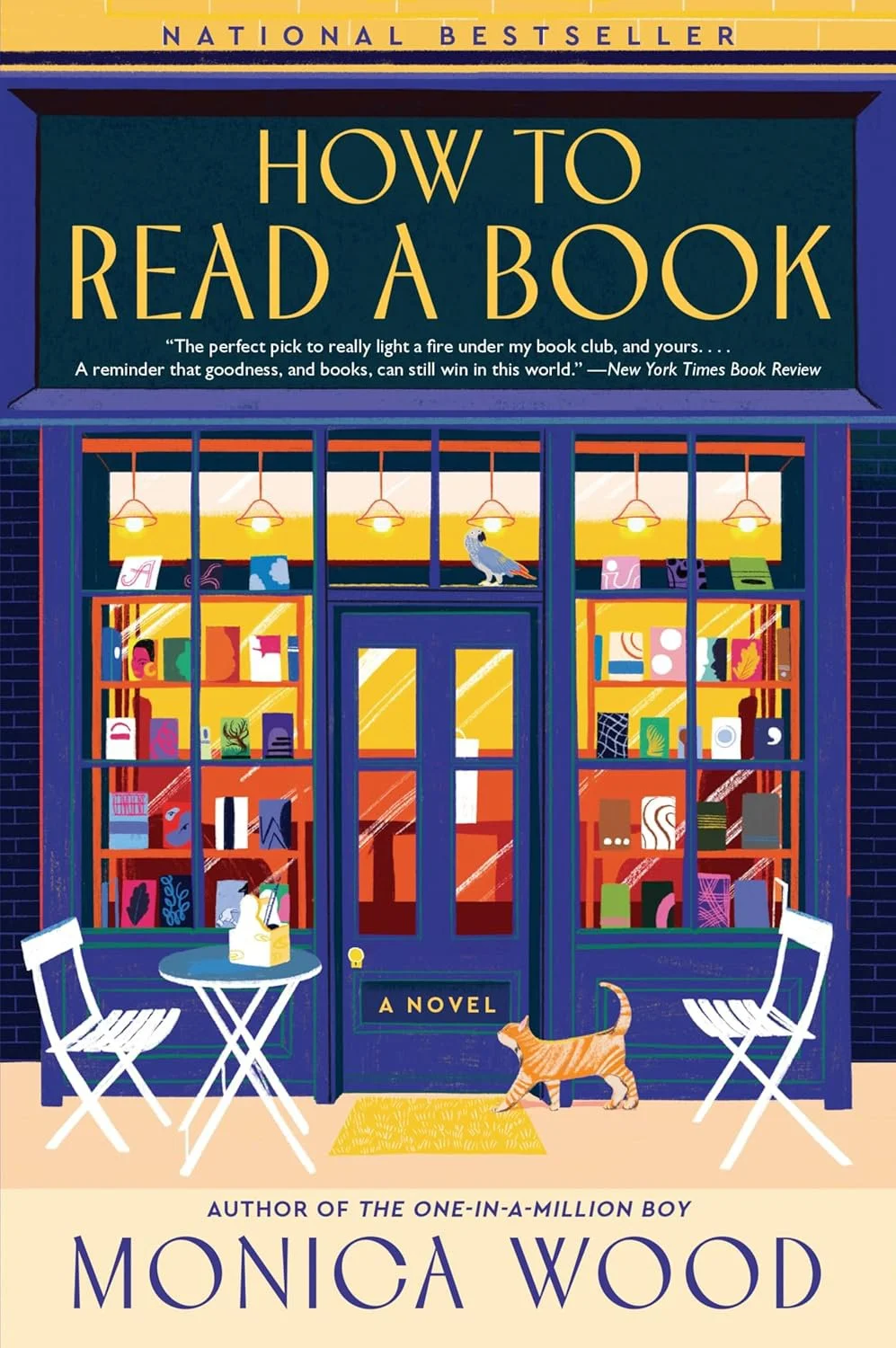
How to Read a Book
2025 New England Society in the City of New York Fiction Award
Texas Lariat List (25 best books of 2025)
“Indie Next” pick
2025 Westport Prize for Literature, runner-up
American Booksellers Association national bestseller
Chosen 10 times as the “Big Read” or “Community Read” in cities across the country, from Largo, FL, to Lake Oswego, OR.
Violet Powell, a 22-year-old from rural Abbott Falls, Maine, has just been released from prison after serving time for a drunk-driving crash in which she killed a kindergarten teacher. Harriet Larson, a retired English teacher who runs the prison book club, is facing the unsettling prospect of an empty nest. And Frank Daigle, a retired machinist, is still haunted by the complications of his marriage to the woman Violet killed. When these lost souls encounter each other one morning in a Portland bookstore, their lives begin to intersect in unlikely, life-altering ways.
I hope readers will find How to Read a Book engaging, often really funny, and ultimately life-affirming. Like most of my novels, this one is about the human desire for connection and our tendency to form families out of broken or spare parts. It’s about forgiving the unforgivable, facing the unfaceable, and … how to read a book. It was a joy to write, largely because the characters came to me so suddenly and so fully formed. I also got to do some delightful research after giving Violet a job in a research lab devoted to the study of bird intelligence. This is a real field of study, and in 2019, just ahead of the pandemic, I got to visit the bird lab of Dr. Irene Pepperberg at Harvard and met Athena and Griffin, two adorable and ridiculously smart parrots. To learn more about the birds and this fascinating research, visit www.alexfoundation.org.
REVIEWS
Kirkus: “A finely wrought story, beautifully told, with deeply memorable characters.”
Booklist: “Told with compassion and empathy, Wood’s tender novel explores the ways people can surprise themselves and others. A deeply humane and touching novel; highly recommended for book clubs and fans of Shelby Van Pelt’s Remarkably Bright Creatures.”
New York Times: “It’s a charming, openhearted novel, deceptively easy to read but layered with sharp observations, hard truths and rich ideas. [It] nudges the conscience as much as it pulls at the heartstrings. But it is also generously seasoned with unexpected twists and a wonderful wit. … This novel is a reminder that goodness, and books, can still win in this world.”
Mike Greenberg, ESPN sports host: “Off the usual subject: Just finished Monica Wood’s new book How to Read a Book and was blown away. It’s smart and insightful and funny and touching – sometimes all on the same page. Highly recommended. Now back to your regularly scheduled programming.”
Shelf Awareness: “Monica Wood’s sensitive, beautiful fifth novel, How to Read a Book, explores the unexpected ways literature can draw people together … [It] is a wry, hopeful celebration of literature, unlikely friendships, and the power of small gestures of connection.”
Maine Sunday Telegram: “… This open-hearted book radiates kindness…with a combination of irreverence, humor, and grit. … This is a smart feel-good book, rich and complicated.
Books & Review Must-Read Books for May 2024: “Wood examines themes of guilt, atonement, and the transformational potential of literature in their exchanges. The book explores the complexities of life’s decisions and the enormous effects of compassion and second chances with emotional honesty and hopeful insight.”
Christian Science Monitor: “Engaging novel of fresh starts … Shot through with clever asides and spiky feelings, the story ponders trust, reformation, and forgiveness.”
Epoch Times: “Wood blends humor with heroism and pathos, and through these and other characters explores topics like shame, forgiveness, and literature’s ability to alter our perceptions.”
Smoky Mountain News: “It entertained, it made me think, it gave me some insights into the world around me, including talking parrots in a lab, and it made me understand a little bit more about human nature. In short, “How to Read a Book” does what all good fiction should do.”
Booktrib: How to Read a Book is a rare gem to savor, share and gift to book-loving friends. … Put this novel at or near the top of your reading list! It has warmth, charm, wit, hope and understanding.”
Style Blueprint: “Soulful and radiant.”
Denver Post Book Club: “A delightful novel of multigenerational characters … There are laugh-out-loud moments, as well as moments of heartbreak. Plus, the book club segments WILL give you lessons on how to read a book, in thought-provoking ways.”
Book Club Questions
1. Violet has spent two years in prison and yet she retains a sense of innocence: “I move along with the other people … memorizing my route so I can get back, what if I can’t find my way back?” Why is she not more street-hardened by her experience?
2. Early on, Harriet observes: “Once Sophie left for good, this—this dusty quiet—would once again become the sound of evening.” Does this imminent “quiet” affect Harriet’s desire to help Violet? Might she have acted differently had Sophie decided to stay?
3. Of his current job, Frank observes: “His demotion to handyman felt like cool air whooshing through his body.” After a career as a professional machinist, why is this minor bookstore job such a joy?
4. The novel features many instances of generational miscommunication, as when Baker warns Frank off ordering flowers, or when Sophie unapologetically googles Harriet’s students. Sometimes the generation gap is comical, sometimes poignant, sometimes all too recognizable. In what ways did the multigenerational cast of characters affect you as a reader?
5. Did you notice all the parent/child relationships in this novel? Violet and her mother; Harriet and her daughters; Frank and his daughter; the incarcerated women and their children. How do these relationships help us understand the characters? Do they have anything in common as parents?
6. Thinking of Misha, Violet observes: “My theory is that all humans secretly long for the mother they always wanted. This longing turns half of us into resentful babies who didn’t get properly mothered, and the second half into surrogate mothers for the first half.” Is Violet projecting here, or is this a truth you recognized as true as soon as you read it? Were there other observations that struck you in that same way?
7. Seeing Violet for the first time, Frank “plummeted into the ditch of memory.” How did this happen so fast? What does this incident in the bookstore show us about how memories work, especially those we try to suppress?
8. In all of Monica Wood’s novels, characters are shown at work. How do you think seeing Frank, Harriet, and Violet at work deepens our sense of who they are?
9. Though she doesn’t quite know it, Violet is on a journey of self-forgiveness. How does working with the parrots contribute to that journey? Would a job at Dunkin’ Donuts have provided a similar benefit? How do animals in general contribute to our sense of who we are?
10. Were you aware of avian-cognition research before meeting Ollie and his colleagues? Were there other things you learned by temporarily living these characters’ lives?
11. How do you explain Dr. Petrov’s overwhelming influence on Violet? What does she need that he provides?
12. When Frank and Harriet meet, they have an entire life behind them, plenty of mileage on their bodies and on their psyches. How does this affect their budding relationship? How is “old” love different from “young” love? How is it the same?
13. Violet tells Misha, “The writer writes the words. The given reader reads the words. And the book, the unique and unrepeatable book, doesn’t exist until the given reader meets the writer on the page.” What life experience did you, the given reader, bring to this book that made it exist?
14. In one of the final scenes, Violet’s prison experience returns to her in a profoundly different light. How does her interaction with Dawna-Lynn demonstrate how Violet has changed since her release?
15. At the end, when you realize that Violet has been teaching us not “how to read a book” but how to read this book, what did you think?